Reading Your Crumb: Top 5 Problems
Dense, gummy, flat or full of giant holes? Your crumb tells you exactly what happened during fermentation, shaping and baking. A quick diagnosis chart for the five most common problems.
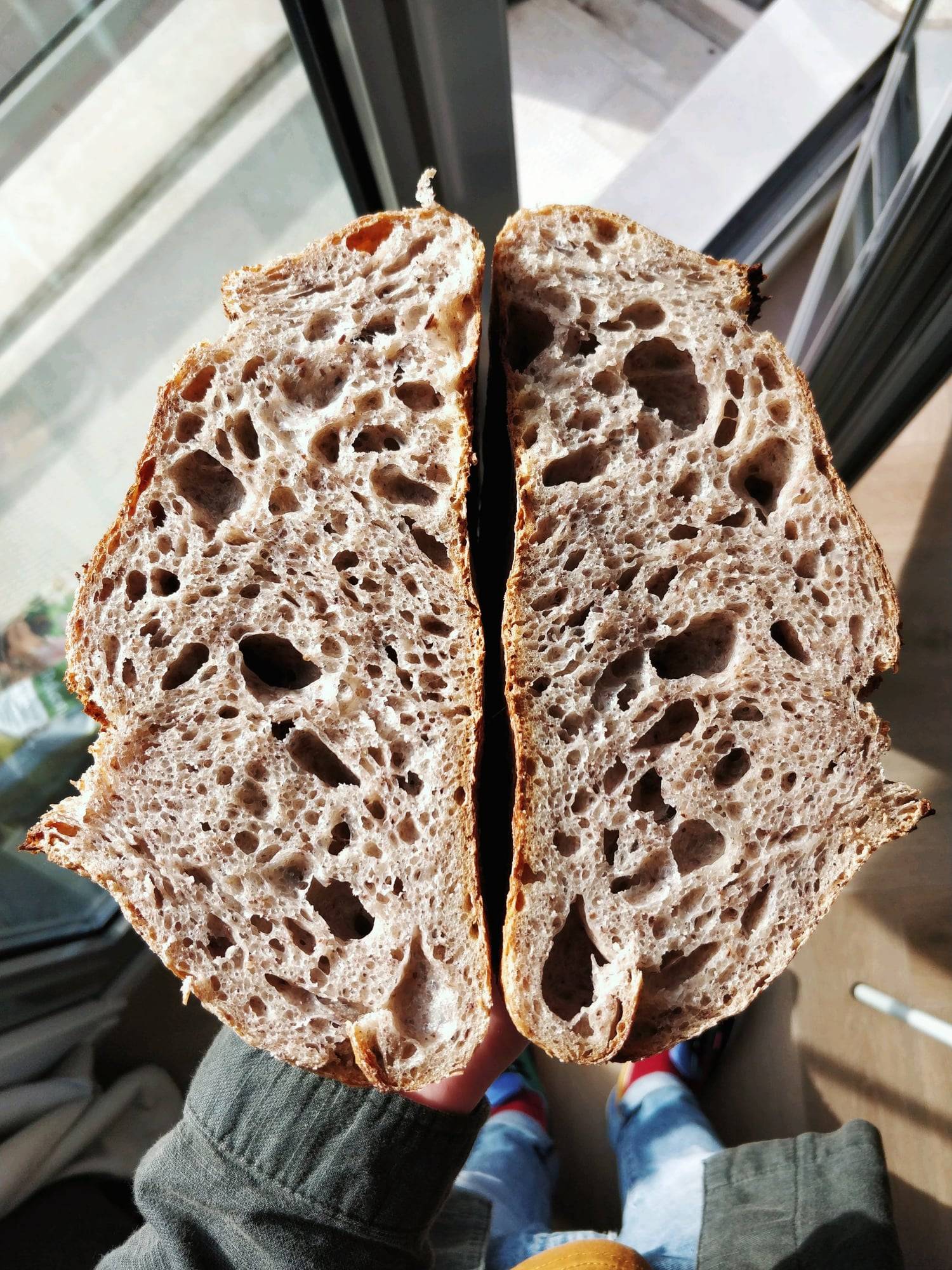
Every loaf is a report on how the bake went. Once you learn to read the crumb, you stop guessing and start adjusting one thing at a time.
1. Dense and tight, with a few big holes at the top
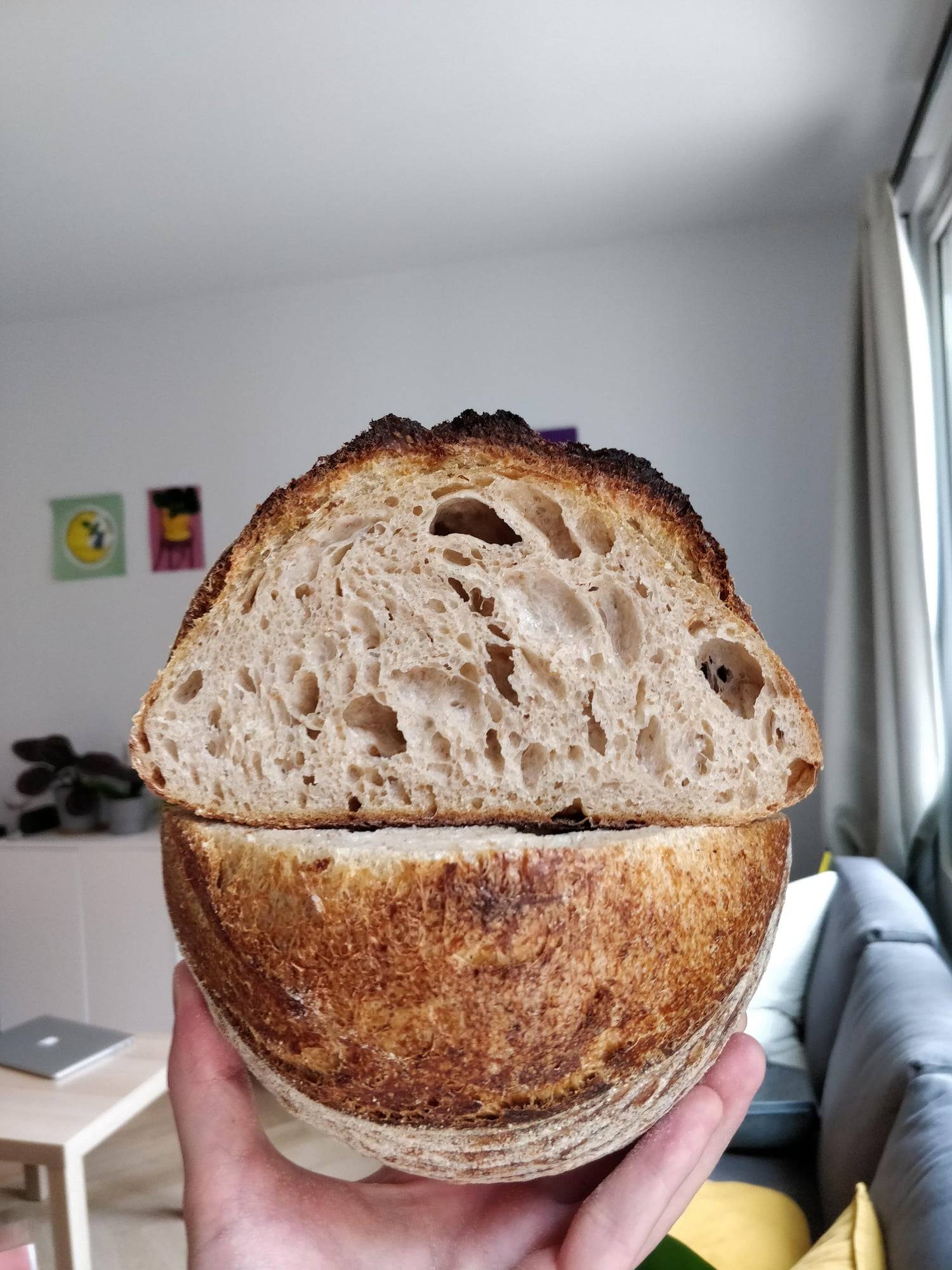
Most likely: under-fermented. The dough didn’t have enough time (or warmth) in bulk, so the gas collected in a few places instead of all through the loaf.
Next bake: extend the bulk by 30–60 minutes, or keep the dough warmer (around 25°C). Look for a light, jiggly dough with bubbles on the sides and top.
2. Gummy, wet-looking crumb
Most likely: cut too early, under-baked, or under-fermented.
Next bake: bake until the crust is deep golden-brown — darker than you think. Then wait at least an hour before slicing. The inside is still setting.
3. Flat loaf that spreads out
Most likely: over-fermented, or not enough strength and tension.
Next bake: shorten the bulk a little, do one extra set of folds, and focus on a tight final shape. A cold proof in the fridge also helps the dough hold its shape.
4. Even, tight crumb with no big holes, a bit bready
Most likely: not bad at all! Often a sign of low hydration, a very tight shape, or lots of wholegrain.
Next bake: try adding 10–20 g more water, and handle the dough more gently after bulk.
5. Huge tunnel under the crust (“flying crust”)
Most likely: under-proofed, or a skin formed on the dough.
Next bake: let the cold proof go a bit longer and keep the dough well covered. Make sure you flour the banneton, not the dough itself, too heavily.
Still stuck? Send me your crumb. With Crumb Diagnosis I’ll tell you exactly what happened and the top 3 changes for your next bake.
Want the whole method in one place?
Get the free Master Loaf guide: recipe, timelines, starter checks and a crumb diagnosis chart.